get in touch
PGS Goes Pink | This October, we’re donating $5 for every unit sold to support breast cancer research. Learn More →


BEHAVIORAL HEALTH
Behavioral Health Privacy Glass for Safer Care Environments
Balance patient privacy with the visibility staff need to support care, supervision, and safety.
PGS provides privacy and observation solutions for patient rooms, behavioral health units, counseling spaces, staff areas, and other openings where control, durability, and whole-assembly performance matter.
PRIVACY AND OBSERVATION
How Does Privacy Glass Support Behavioral Health Care?
Behavioral health privacy glass allows visibility through a door, window, or interior opening to change without permanently closing the space.
Depending on the selected system, staff can open or obscure a view, switch glass between transparent and private states, adjust enclosed blinds, or incorporate permanent imagery and visual separation into the glazing.
This gives facilities more control over privacy and observation while reducing reliance on exposed curtains, blinds, cords, and other components that may be inappropriate for the care environment.
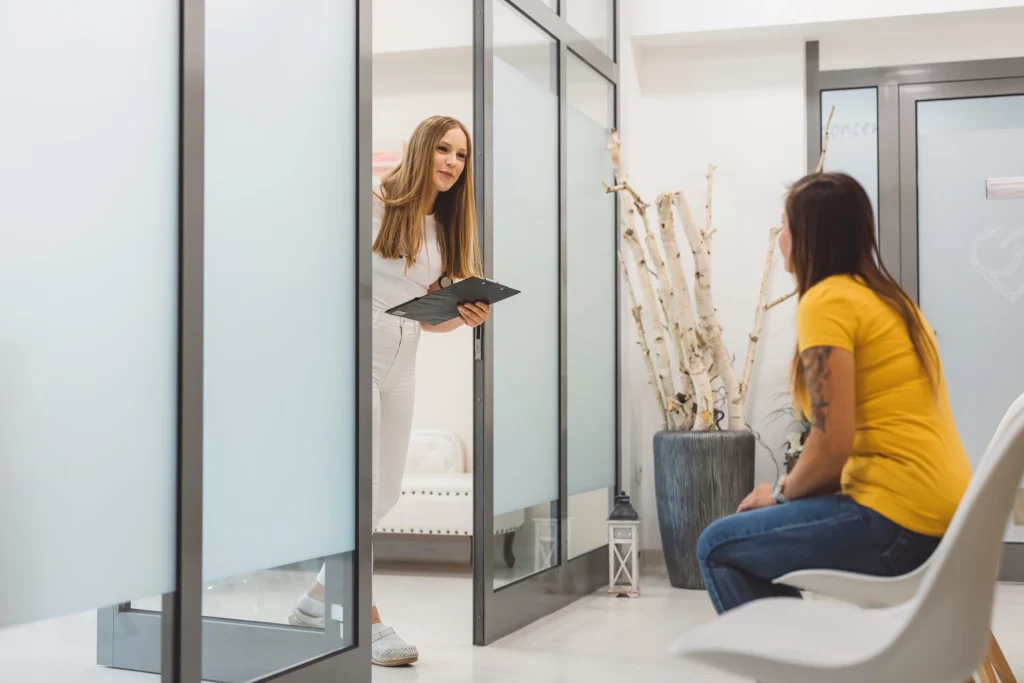
BEHAVIORAL HEALTH DESIGN PRIORITIES
What Does Behavioral Health Glazing Need to Accomplish?
Healthcare glazing must balance privacy, visibility, hygiene, and access to natural light.
Support Staff Observation
Provide purposeful sightlines into patient rooms and supervised areas when observation is required.
Protect Patient Privacy
Allow views to be obscured during personal care, consultation, rest, and other private activities.
Control Who Operates the Glass
Place controls where authorized staff can reach them without making them accessible from the patient side.
Reduce Exposed Components
Keep privacy mechanisms protected within the glazing or complete opening rather than exposed within the room.
Withstand Demanding Use
Coordinate the glass, frame, door, hardware, and surrounding construction for the intended level of use and risk.
Support a Calmer Environment
Use daylight, color, imagery, and visual separation to make clinical spaces feel less institutional.
BEHAVIORAL HEALTH APPLICATIONS
Where Is Behavioral Health Privacy Glass Used?
Patient Rooms
Give staff controlled visibility into patient spaces while providing privacy when observation is unnecessary.
Observation Doors and Windows
Build staff-managed visibility into doors, walls, and other supervised openings.
Counseling and Consultation Rooms
Provide privacy for conversations without permanently isolating the room from the surrounding care environment.
Seclusion and De-Escalation Spaces
Support controlled observation while limiting patient access to privacy mechanisms and exposed components.
Nurses’ Stations and Staff Areas
Protect work areas, records, and staff activity while preserving useful sightlines into the unit.
Group and Activity Rooms
Adapt visibility for therapy, programming, meetings, and changing levels of supervision.
Corridors and Unit Entrances
Use glazing to support observation, separation, wayfinding, and controlled access throughout the unit.
THE COMPLETE OPENING
Behavioral Health Safety Extends Beyond the Glass
The glass is only one part of a behavioral health opening. The glazing, frame, door, hardware, controls, fasteners, and surrounding construction must work together.
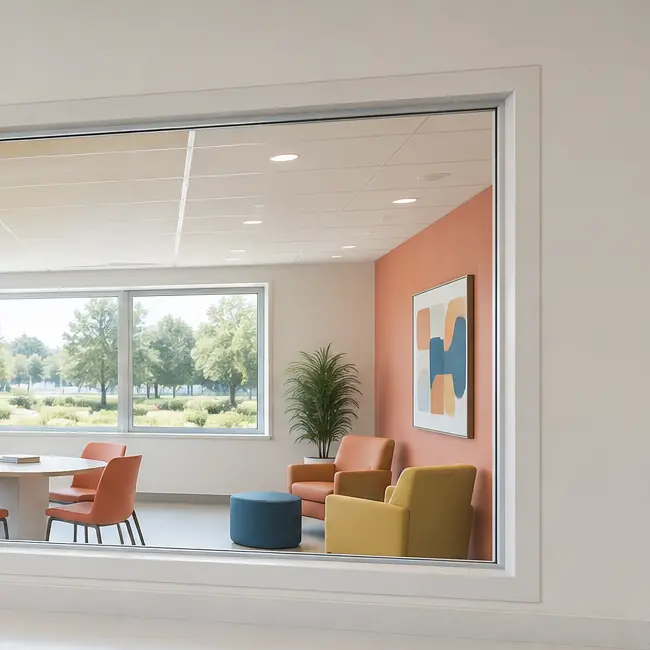
Depending on the project and opening, PGS can help address:
- Impact-resistant glazing options
- Fire-rated assembly requirements
- Bullet-resistant glazing options
- Hollow metal doors and frames
- Staff-side controls
- Ligature-conscious operating options
- Protected glass edges
- Observation angles and blind spots
- Maintenance and replacement access
Required ratings and specialty configurations must be confirmed for each opening. A product characteristic should not be treated as a rating for the complete assembly unless the glass, frame, door, hardware, and installation have been evaluated together.
CONTROL AND ACCESS
Who Should Control Privacy and Observation?
The control method should reflect who uses the space, where the opening is located, and how quickly visibility may need to change.
Staff-Controlled Operation
Controls can be located on the secure or staff side of the opening to prevent unauthorized operation.
Mechanical or Non-Electric Control
Mechanical privacy panels and certain BetweenGlassBlinds™ configurations can operate without electrical switching.
Electronic Control
Switchable glass can be operated through compatible wall controls, touchless controls, remotes, or integrated systems.
Permanent Privacy
Decorative patterns, imagery, and color can provide visual separation without a movable or powered control.
Note: Control location, hardware, wiring, access, and failure conditions should be established before the door, frame, and surrounding construction are finalized.
PGS BEHAVIORAL HEALTH SOLUTIONS
Privacy Glass Options for Behavioral Health Facilities
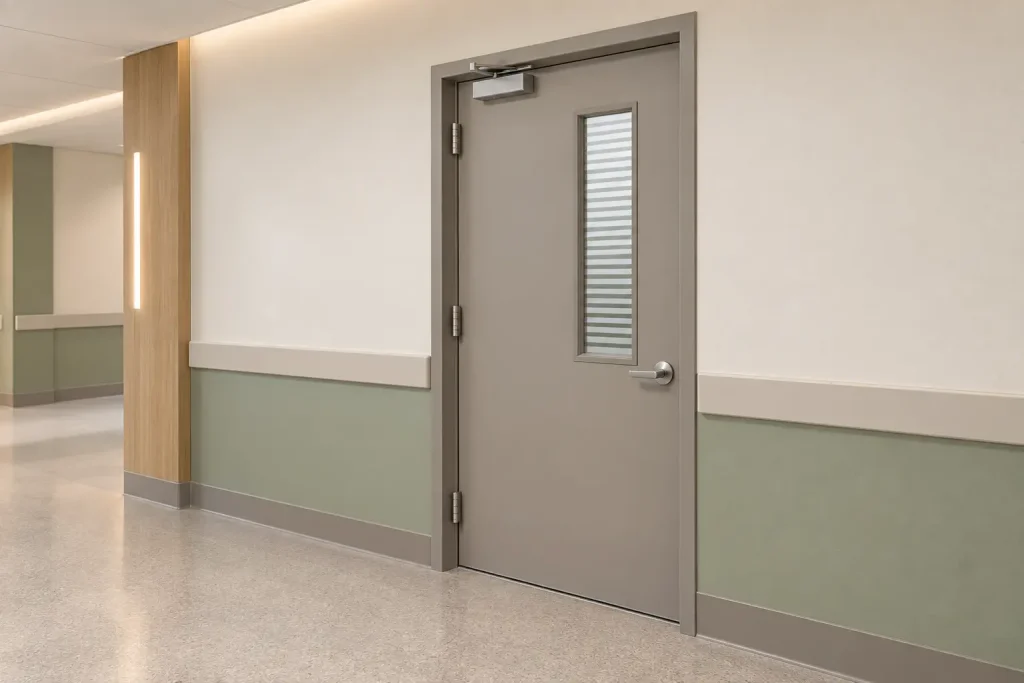
Vistamatic® | Privacy Vision Panels
Uses mechanically operated patterned-glass panels to provide clear observation when open and visual privacy when closed. Available operating options support staff-controlled and ligature-conscious applications.
Best for: Patient-room doors, observation panels, seclusion spaces, and other staff-controlled openings
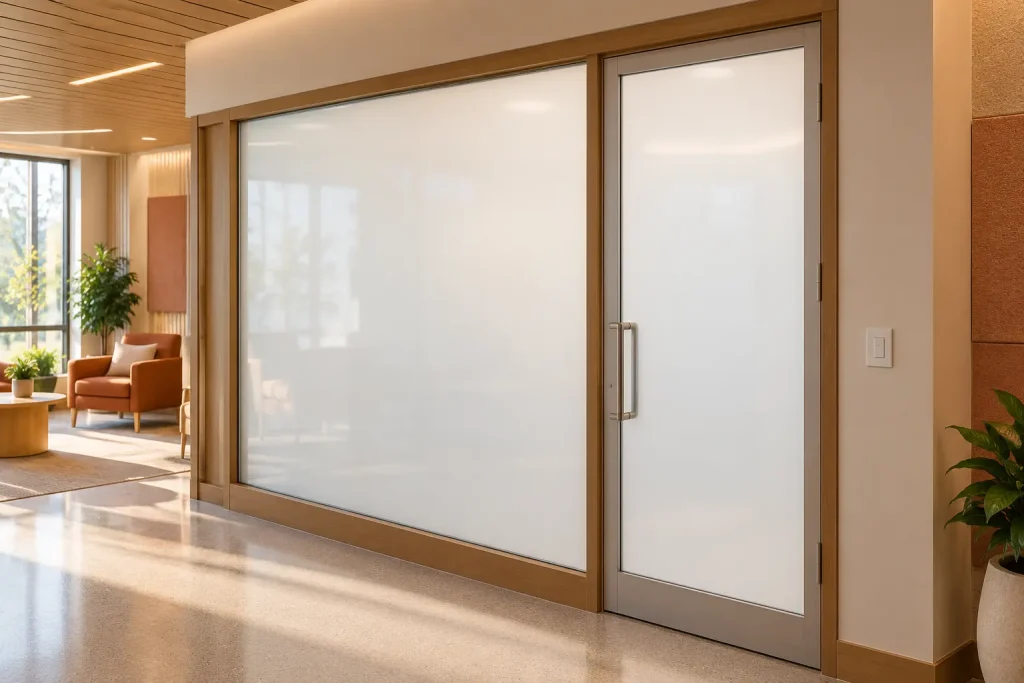
Clarity™ | Switchable Privacy Glass
Changes between transparent and private states on demand while continuing to transmit diffused light through the opening.
Best for: Counseling rooms, consultation spaces, staff areas, and interior windows or partitions requiring instant privacy
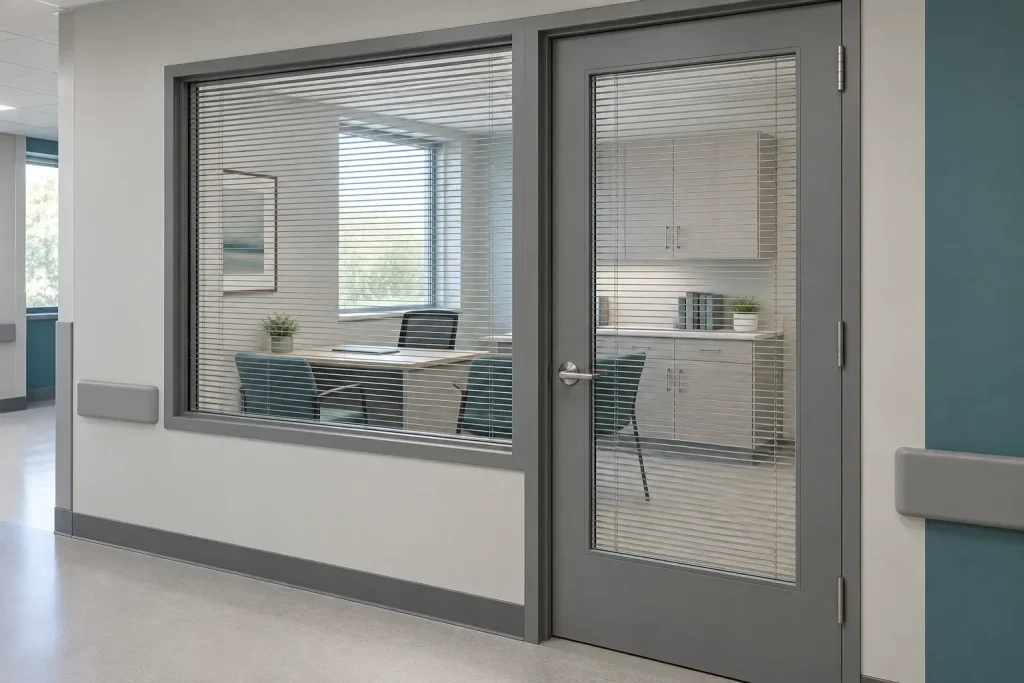
BetweenGlassBlinds® | Integral blinds
Provides adjustable privacy, sightlines, and light control with the blinds protected inside the glass assembly. Non-electric configurations are available.
Best for: Consultation rooms, staff offices, interior doors, and supervised spaces requiring adjustable control
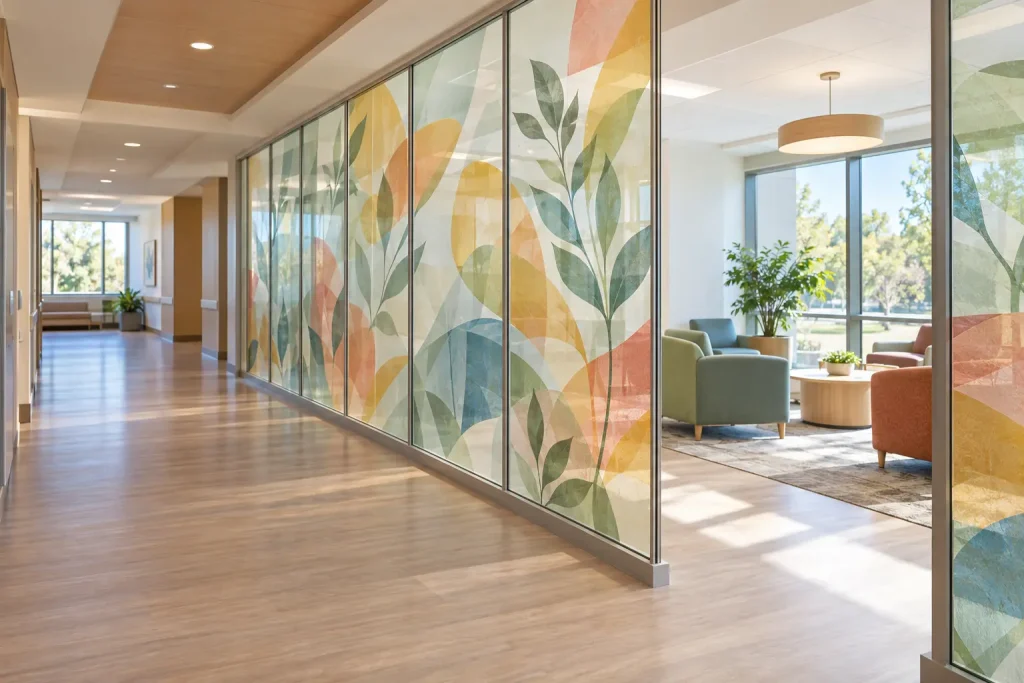
DecoGlass | Decorative Architectural Glass
Incorporates permanent imagery, patterns, or solid colors into architectural glass to provide visual separation, calming design, and wayfinding.
Best for: Unit entrances, corridors, activity rooms, reception areas, privacy bands, and room identification
BEFORE YOU SPECIFY
What Should Be Considered When Selecting Behavioral Health Privacy Glass?
Start with the clinical purpose of the opening and the people who should control it.
PGS can help facility teams, architects, behavioral health planners, glazing contractors, and general contractors compare privacy technologies and coordinate them with the complete opening.
- When staff need a clear view
- When patients need visual privacy
- Who should operate the privacy system
- Which side should contain the controls
- Whether electrical power is available
- The required glass and assembly ratings
- Door, frame, and hardware requirements
- Acceptable observation angles and blind spots
- Exposure to impact, tampering, or repeated use
- Cleaning and infection-control requirements
- Maintenance and replacement access
- How the glass will affect the character of the care environment
Frequently Asked Questions
Behavioral Health Privacy Glass FAQs
What is the best privacy glass for behavioral health observation?
Vistamatic® is the primary PGS solution for controlled behavioral health observation. Its mechanically operated patterned-glass panels allow staff to open the view for observation and close it for visual privacy without electrical power.
The appropriate configuration depends on the required viewing area, control method, glass, frame, door, hardware, and safety requirements.
Can behavioral health privacy glass provide both observation and privacy?
Yes. Vistamatic® can move between open and obscured viewing states, while Clarity™ can switch between transparent and private states. The better option depends on the opening, control requirements, available power, and required level of observation.
Can patients operate the privacy glass?
Patient control depends on the care model and application. In higher-risk spaces, controls can be located on the staff side or configured for authorized operation only.
Are non-electric privacy options available?
Yes. Vistamatic® operates mechanically, certain BetweenGlassBlinds™ configurations use non-electric controls, and DecoGlass provides permanent privacy without wiring or power.
Are ligature-resistant controls available?
Yes. Vistamatic® offers operating options intended for behavioral health and other environments where conventional projecting hardware may be inappropriate. The complete control and opening configuration should be reviewed for the specific space.
Can privacy glass be installed in behavioral health doors?
Yes. Privacy products can be incorporated into compatible doors and hollow metal frames. The glass, frame, door, hardware, glazing method, and required ratings must be coordinated as a complete opening.
Are impact-resistant options available?
Yes. Specialty glazing options are available for applications requiring additional impact performance. The required test standard and complete assembly must be identified before the product is specified.
Are fire-rated or bullet-resistant options available?
Fire-rated and bullet-resistant glazing options may be incorporated into appropriate configurations. Required ratings must be confirmed for the complete opening, including the glass, frame, door, hardware, and installation.
Can behavioral health privacy glass be cleaned easily?
Available systems can provide smooth exterior glass surfaces without exposed curtains, cords, or room-side blinds. Cleaning requirements depend on the selected product, framing, hardware, and facility protocol.
Can privacy glass include calming imagery or wayfinding?
Yes. DecoGlass can incorporate permanent imagery, patterns, colors, and room-identification elements. VISTA-Art can combine custom imagery with Vistamatic® privacy and observation functionality.
Bring the Right Privacy Solution Into Your Project
Tell us about your application, glazing requirements, and project timeline. Our team can help you evaluate products, configurations, and next steps.

Innovative privacy and specialty glass solutions engineered for the way spaces need to perform.
Company
Products


Stay Informed
Get PGS news, product updates, project highlights, and Daylight Opening, our monthly industry newsletter.
Privacy Glass Solutions © 2026 | All Rights Reserved | Privacy Policy | Terms & Conditions