get in touch
PGS Goes Pink | This October, we’re donating $5 for every unit sold to support breast cancer research. Learn More →


GOVERNMENT & PUBLIC SAFETY
Privacy Glass for Government and Public Safety Facilities
Control visibility across public, administrative, and secure areas while addressing the safety, security, and performance requirements of the opening.
PGS provides privacy glass, integrated shading, decorative glass, specialty glazing, and framing options for government buildings, courts, public safety facilities, and other civic environments.
CONTROLLED VISIBILITY
What Is Privacy Glass for Government Buildings?
Government privacy glass controls visibility, daylight, shade, or blackout through doors, windows, vision panels, and interior partitions.
Depending on the selected technology, occupants can switch between transparent and private states, adjust sightlines, operate privacy mechanically, control incoming light, or incorporate permanent screening and wayfinding into the glass.
The appropriate solution depends on the facility, the sensitivity of the space, the required level of observation, who should control the opening, and any safety or security performance requirements.
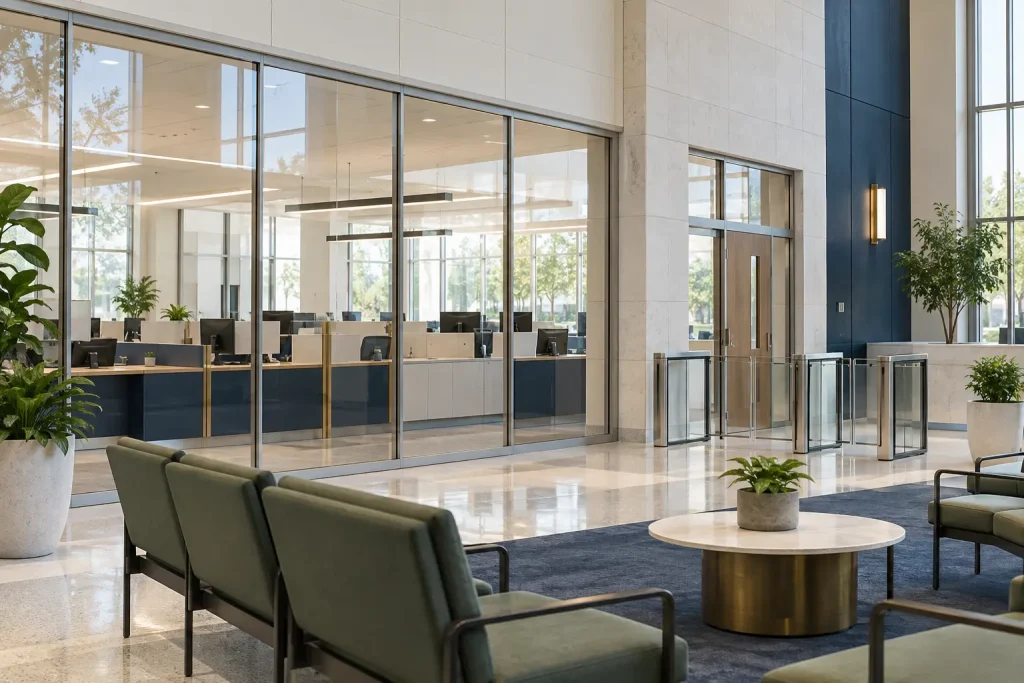
CONTROL BY ACCESS LEVEL
How Do Visibility Needs Change Across a Government Facility?
Public-Facing Areas
Reception counters, service centers, waiting areas, and public meeting rooms may need separation and privacy without making the environment feel inaccessible.
Staff and Administrative Areas
Offices, records departments, interview rooms, and conference spaces require privacy for protected information, internal work, and confidential conversations.
Secure and High-Security Areas
Public safety facilities, control rooms, detention environments, and restricted-access spaces may require controlled observation, secure-side operation, and specialty glazing.
GOVERNMENT PRIVACY GLASS APPLICATIONS
Where Is Privacy Glass Used in Government Facilities?
Public Services
Lobbies, Reception Areas, and Service Counters
Create separation, control views into staff areas, support wayfinding, and maintain a professional public-facing environment.
Administration and Legal Services
Offices, Records Departments, Courts, and Interview Rooms
Protect confidential work, legal discussions, sensitive records, and internal meetings.
Public Safety and Secure Operations
Police Facilities, Dispatch Centers, Control Rooms, and Detention Areas
Support controlled observation, restricted access, and changing visibility across security-sensitive openings.
Training and Coordination
Briefing Rooms, Emergency Operations Centers, and Presentation Spaces
Manage privacy, incoming light, and blackout for training, planning, monitoring, and audiovisual use.
Civic and Exterior Spaces
Entrances, Public Corridors, Exterior Offices, and Shared Areas
Manage daylight, solar exposure, visual separation, civic identity, and wayfinding throughout the facility.
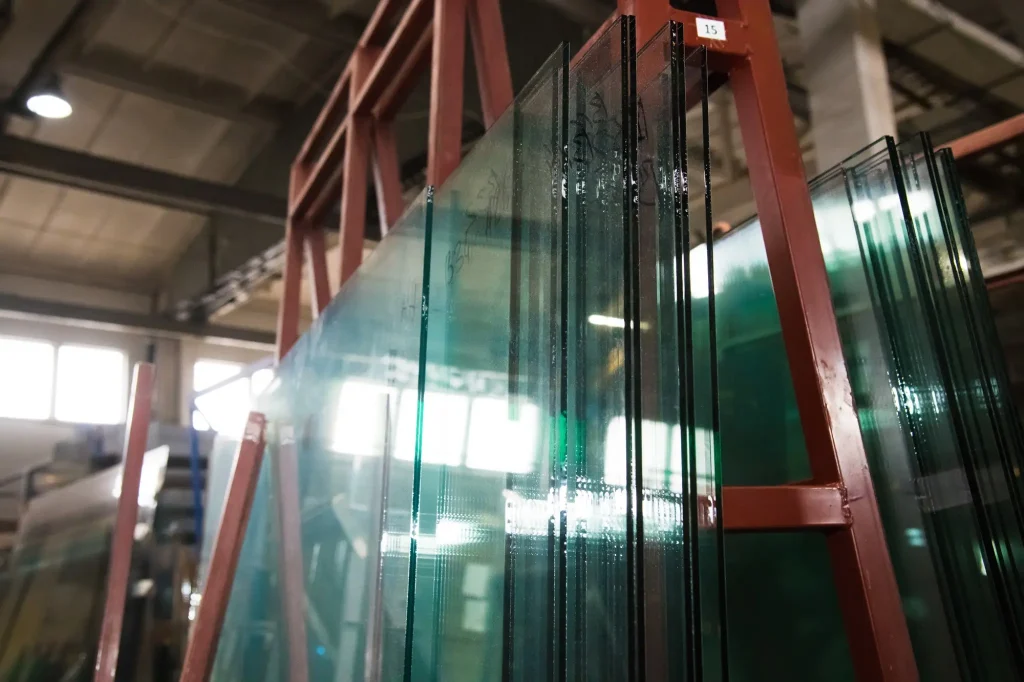
PERFORMANCE OPTIONS
Meet Privacy, Safety, Security, and Energy Requirements
Privacy may be only one requirement for a government opening. Depending on its location and function, the glass may also need to address safety, security, fire protection, durability, or exterior performance.
Available PGS glazing and framing options may include:
- Tempered
- Laminated
- Impact-resistant
- Fire-rated
- Bullet-resistant
- Polycarbonate
- Low-E
- Tinted
- Insulating glass
- Hollow metal frames
- Custom configurations
The glass, frame, door, hardware, controls, fasteners, and surrounding construction must be evaluated together. Not every product is compatible with every glass type, frame, or rating. Required performance, testing, and product compatibility should be confirmed for each opening.
PGS GOVERNMENT SOLUTIONS
Privacy Glass Options for Government and Public Safety Facilities
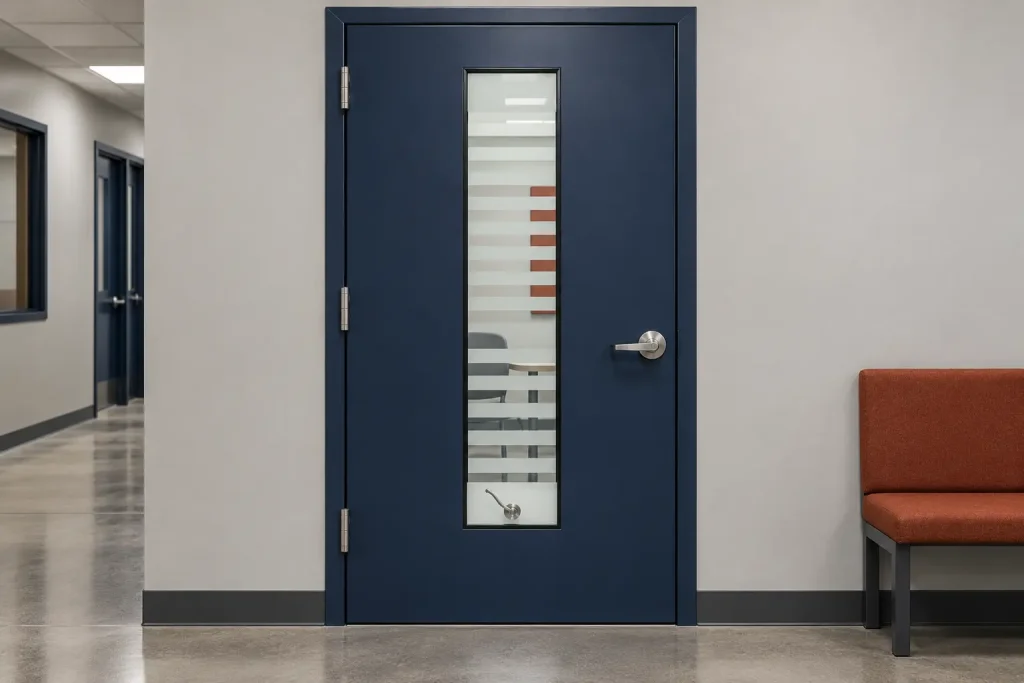
Vistamatic® | Privacy Vision Panels
Uses mechanically operated patterned glass panels to control visibility without electrical power.
Best for: Government doors, interview rooms, observation areas, public safety facilities, and compatible secure vision-panel openings
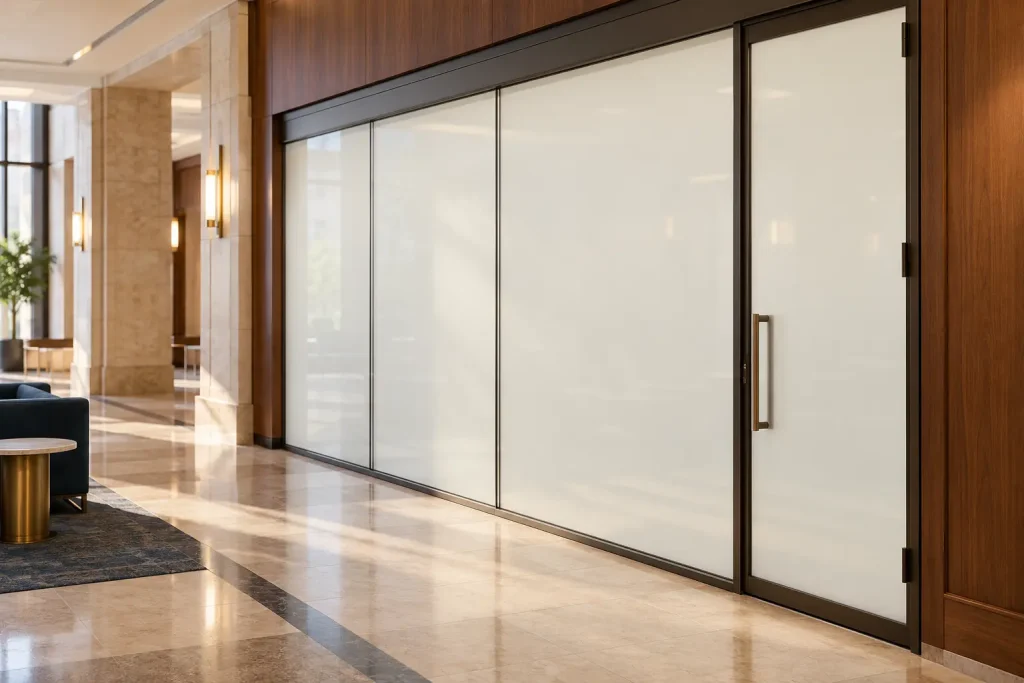
Clarity™ | Switchable Privacy Glass
Changes between transparent and private states on demand while continuing to transmit diffused light.
Best for: Administrative offices, conference rooms, interview spaces, service areas, and larger glazed openings requiring instant privacy
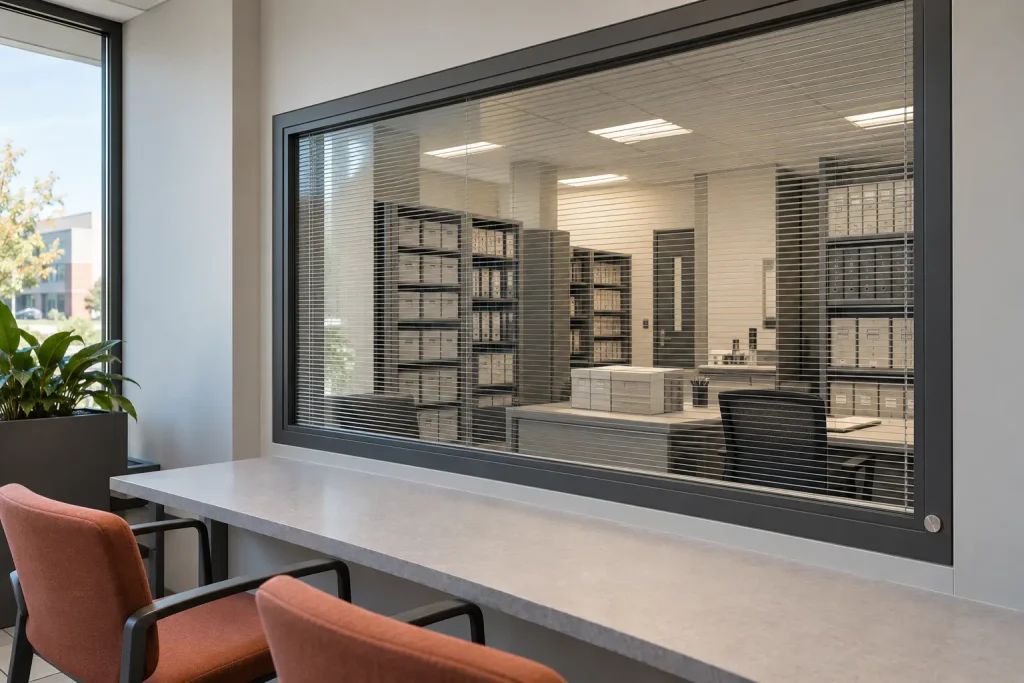
BetweenGlassBlinds™ | Integral Blinds
Provides adjustable privacy, sightlines, and light control using blinds protected within the glass assembly. Manual, magnetic, and powered configurations are available.
Best for: Offices, service counters, interior windows, interview rooms, doors, and administrative partitions
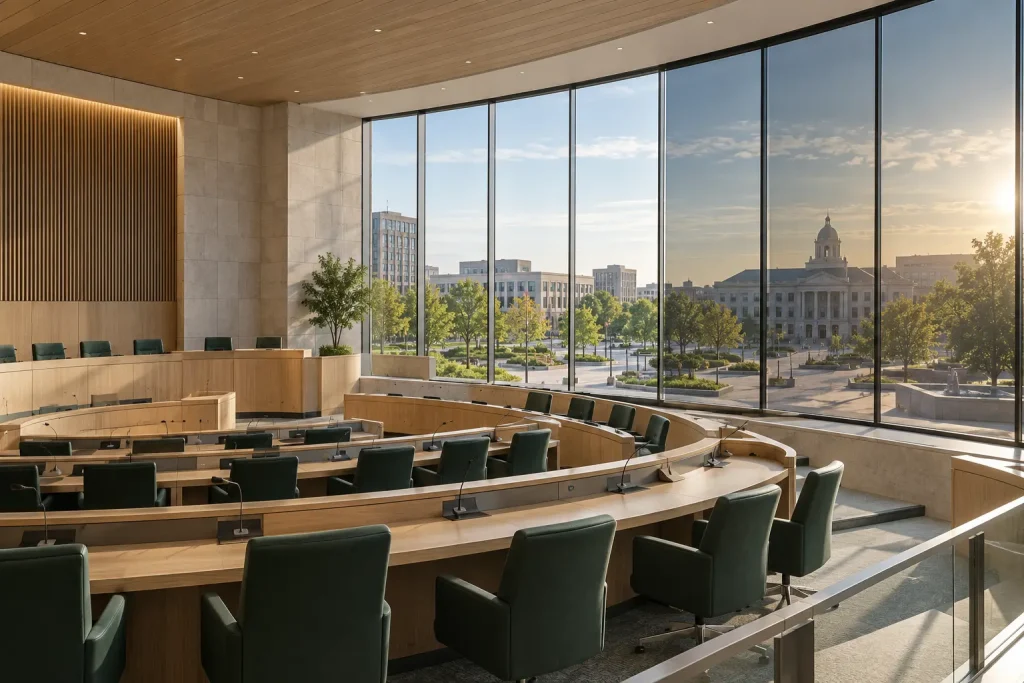
HUEE Dynamic Glazing
Provides clear, solar-control, privacy, and shade states within one dynamic glazing system.
Best for: Exterior-facing offices, public lobbies, shared civic spaces, and operational environments requiring changing daylight, privacy, shade, or blackout conditions
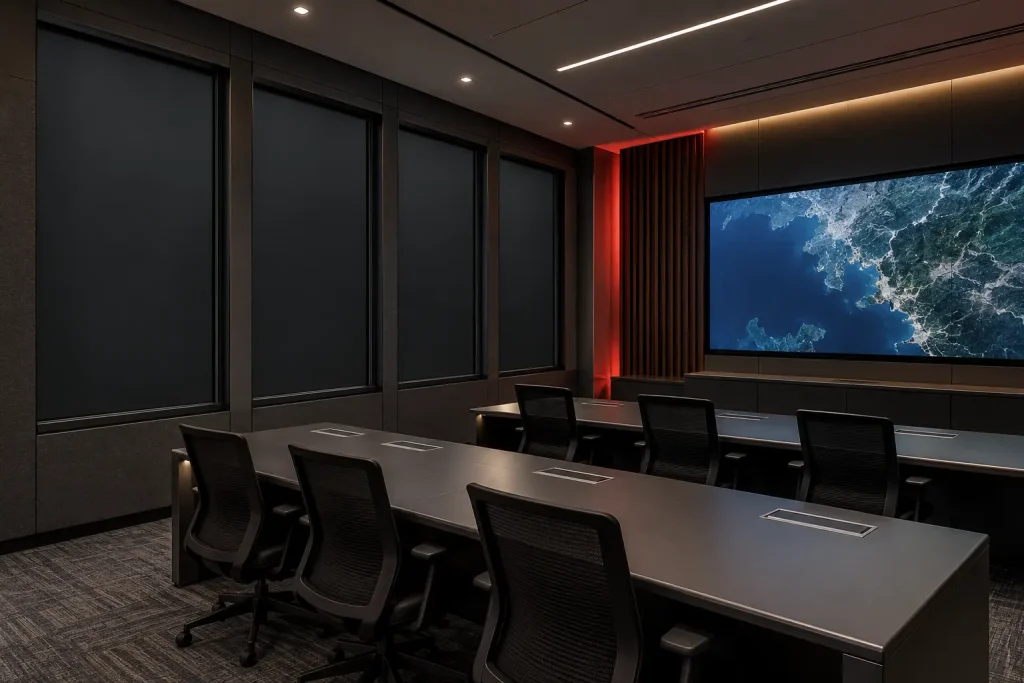
Lyto™ Smart Shades
Uses an electrostatic shade sealed within an insulating glass unit to provide complete privacy and blackout without exposed cords or motors.
Best for: Briefing rooms, training facilities, command spaces, presentation rooms, and other areas requiring blackout

DecoGlass | Decorative Architectural Glass
Uses permanent imagery, patterns, solid colors, and visual markers to add privacy, wayfinding, civic identity, and design to architectural glass.
Best for: Entrances, lobbies, public corridors, service areas, decorative partitions, and branded feature glass
BEFORE YOU SPECIFY
What Should Government Facilities Consider Before Selecting Privacy Glass?
The right solution depends on the sensitivity of the space, the required level of observation, and the performance requirements of the opening.
PGS can help government agencies, facility teams, architects, glazing contractors, and general contractors compare options before the glass, framing, hardware, and controls are finalized.
Before selecting privacy glass for a government or public safety facility, determine:
- Whether the area is public-facing, staff-only, or restricted
- Whether the opening requires privacy, observation, daylight control, or blackout
- Who should be able to operate the privacy system
- Whether controls must be located on the secure side
- Whether the solution should be powered, mechanical, manual, or permanent
- How frequently visibility will change
- Required fire, impact, security, or specialty-glazing performance
- Door, frame, hardware, and control requirements
- Available electrical access
- Exterior energy and solar-control requirements
- Integration with building or room-control systems
- Cleaning, maintenance, and replacement access
- Whether the project involves new construction or existing openings
Frequently Asked Questions
Government and Public Safety Privacy Glass FAQs
What privacy glass is best for government doors and vision panels?
The best option depends on the size of the opening and how visibility should be controlled. Vistamatic® provides mechanical privacy for compatible vision panels. BetweenGlassBlinds™ provides adjustable sightline control, while Clarity™ provides on-demand privacy for compatible glazed doors and larger openings.
Can privacy controls be restricted to the secure side?
Some compatible configurations can place privacy controls on the staff or secure side of an opening. Control location, hardware, accessibility, and emergency-operation requirements should be established during project planning.
Are non-electric government privacy options available?
Yes. Vistamatic® operates mechanically without electricity. BetweenGlassBlinds™ is available with manual and magnetic controls. DecoGlass provides permanent screening, patterns, or visual privacy without power or moving components.
Can government privacy glass be fire-rated, impact-resistant, or bullet-resistant?
Yes. PGS offers fire-rated, impact-resistant, bullet-resistant, laminated, tempered, polycarbonate, and other specialty glazing options across its portfolio.
Not every privacy product is compatible with every rating or glazing type. Required performance should be established before the glass, frame, door, hardware, and controls are selected.
Which government privacy solutions provide complete blackout?
Lyto™ Smart Shades provide complete privacy and blackout using an electrostatic shade sealed within an insulating glass unit. HUEE Dynamic Glazing also includes a shade state for blackout and maximum solar control.
Can privacy glass support both observation and confidentiality?
Yes. Clarity™, Vistamatic®, and BetweenGlassBlinds™ allow visibility to change according to operational, observation, and privacy requirements. The appropriate system depends on the opening, desired sightlines, control method, and security requirements.
Can privacy glass be installed in an existing government building?
In some cases, yes. Existing glass dimensions, doors, frames, hardware, electrical access, surrounding construction, and required ratings must be evaluated before a product is selected.
Does privacy glass provide acoustic privacy?
Not automatically. Privacy glass controls visibility. Acoustic privacy depends on the complete wall, door, frame, glazing, seals, and surrounding construction.
Bring the Right Privacy Solution Into Your Project
Tell us about your application, glazing requirements, and project timeline. Our team can help you evaluate products, configurations, and next steps.

Innovative privacy and specialty glass solutions engineered for the way spaces need to perform.
Company
Products


Stay Informed
Get PGS news, product updates, project highlights, and Daylight Opening, our monthly industry newsletter.
Privacy Glass Solutions © 2026 | All Rights Reserved | Privacy Policy | Terms & Conditions