

How Dynamic Glazing Is Expanding What’s Possible in Building Design
Daylight and outside views are valuable parts of building design, yet their usefulness changes with solar exposure, occupancy, and the activities taking place inside. As sunlight moves across a façade and spaces shift between uses, the glazing may need to admit light, moderate brightness, or provide visual privacy. These needs can occur separately or together, creating a range of conditions for the same opening to accommodate.
Dynamic glazing gives designers ways to respond within the opening itself. Familiar clear-to-frosted systems provide adjustable visual privacy; other technologies change tint and light transmission. Where these functions are combined, the glazing can accommodate a wider range of conditions than either function alone.
That flexibility has implications for both room design and building performance. It brings privacy and views into the same conversation as daylight, solar exposure, and the energy required to keep occupied spaces comfortable.
1. Dynamic glazing covers more than privacy glass
Dynamic glazing is a broad category of glazing that changes its optical properties in response to a control signal or environmental conditions. Berkeley Lab describes dynamic glazing technologies as systems with actively or passively controlled properties that regulate the admission of light and heat.
Conventional switchable privacy glass belongs within this category. A familiar example uses polymer-dispersed liquid crystal, or PDLC, to change between a clearer view and a light-scattering, frosted appearance. Clarity™ switchable privacy glass illustrates this approach: it provides an adjustable view while continuing to transmit diffused light in its private state.
Variable-tint glazing serves a different purpose. Technologies such as electrochromic glass change how much light passes through while retaining a view. Berkeley Lab’s research on electrochromic windows examines this relationship between tint, views, glare, and solar heat gain.
These capabilities are not interchangeable. A darker pane does not necessarily obscure a view, and a frosted pane does not necessarily make a room dark. That distinction helps explain why combining functions can be valuable.
2. Additional states create additional design choices
When a system can control both light transmission and visual screening, the opening can offer combinations that a simple clear-to-frosted change cannot provide by itself.
The combinations below illustrate how additional states can serve practical needs. Availability and performance vary by system.
- An open view with higher light transmission. In a classroom, a lighter state can admit useful daylight and preserve the outside view when strong sun or glare is not a concern. The benefit relates to the current lighting conditions, rather than a fixed setting for the entire school day.
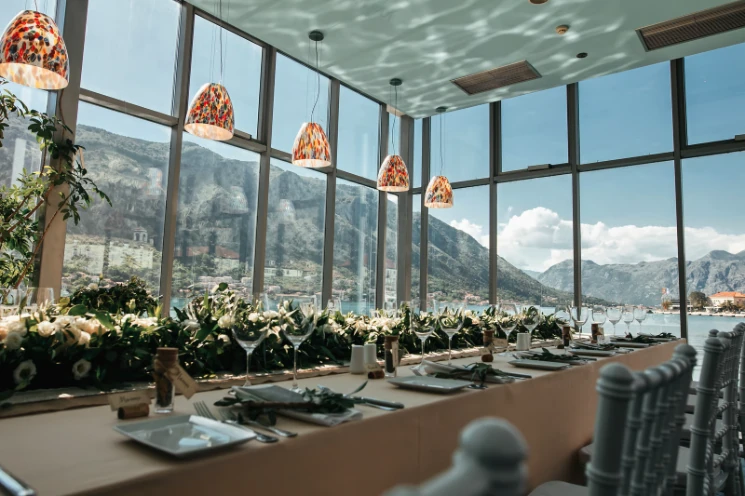
- An open view with reduced light transmission. At a hotel restaurant overlooking the coast, a suitable tinting state can moderate incoming brightness while preserving the view that contributes to the guest experience. The purpose is light control, rather than visual screening.
- An obscured view with transmitted light. A consultation room can screen the view from a corridor while allowing diffused light through its interior glazing. This supports visual privacy without requiring the opening to block all light.
- An obscured view with reduced light transmission. In a residential bedroom facing nearby properties, occupants may want visual screening and less incoming light while resting during the day. Combined functions can address these needs together, although the degree of darkening depends on the system.
These examples make the design benefit more concrete: privacy and brightness can call for different responses, even within the same room. A light-reducing setting also contributes to only part of the lighting condition. Complete room blackout depends on other openings, gaps, and light sources as well.
This is an established direction of development rather than a capability shared by every smart-glass product. Published research on dual-mode liquid-crystal windows explores control of both privacy and radiant energy flow. The available states, their appearance, and the degree of light reduction depend on the selected system.
3. Energy efficiency depends on how the glazing works with the building
Exterior glazing admits daylight, but it can also introduce unwanted solar heat and glare. Reducing incoming light may improve visual comfort, yet excessive darkening can increase the need for electric lighting. Dynamic solar-control glazing offers a way to adjust that balance as conditions change.
The efficiency opportunity comes from coordinating the façade with the building’s lighting and cooling systems. Appropriate tint settings can limit solar heat gain when cooling is needed, while lighter settings can admit useful daylight at other times. Daylight-responsive lighting controls can then reduce electric lighting where sufficient daylight is available.
These effects are specific to the technology and project. The Department of Energy’s report on electrochromic windowsexamines energy benefits alongside the challenges of applying these systems. Results depend on climate, orientation, window area, glazing performance, and control strategy. A privacy-only switching function does not establish equivalent solar-control or energy-saving performance.
For building design, this makes dynamic glazing part of the façade strategy alongside fixed shading, glazing area, and room layout. Orientation influences when solar control is useful, while the depth and arrangement of occupied areas affect how daylight reaches people. Evaluating the complete glazing assembly connects these design choices to its thermal performance.
4. Controls connect the available states to daily use
The settings described above become useful through an operating approach that fits the building. A room with occupant-selected settings functions differently from exterior glazing managed automatically in response to sunlight. Occupant selection can accommodate a lesson, treatment, or period of rest, while automation can respond to changing solar exposure across the day.
Control location, panel grouping, and the relationship between manual selection and automation shape the experience. A hotel guest needs settings that are easy to understand, while a healthcare facility may assign operation to staff in some spaces. Across a façade, different orientations or areas may benefit from different responses. These uses place different demands on control access and programming.
Berkeley Lab’s electrochromic research highlights the importance of control strategies in achieving intended performance. The broader lesson is that adjustable glazing works within a designed system: the glass, controls, room conditions, and operating approach all contribute to the result.
A broader role for architectural glass
Dynamic glazing expands the discussion from the appearance of a pane to the role of the opening within the building. Its contribution may include managing solar exposure, supporting daylight-responsive lighting, preserving views, or adapting visual privacy to room use. The relevant combination depends on the project and the glazing technology.
PGS’s HUEE dynamic glazing brings combined privacy and light-control functions into this conversation. The broader design opportunity is the ability to accommodate different needs within the same opening, with the selected system’s capabilities determining the possibilities for each project.